Rock Climbing Movement
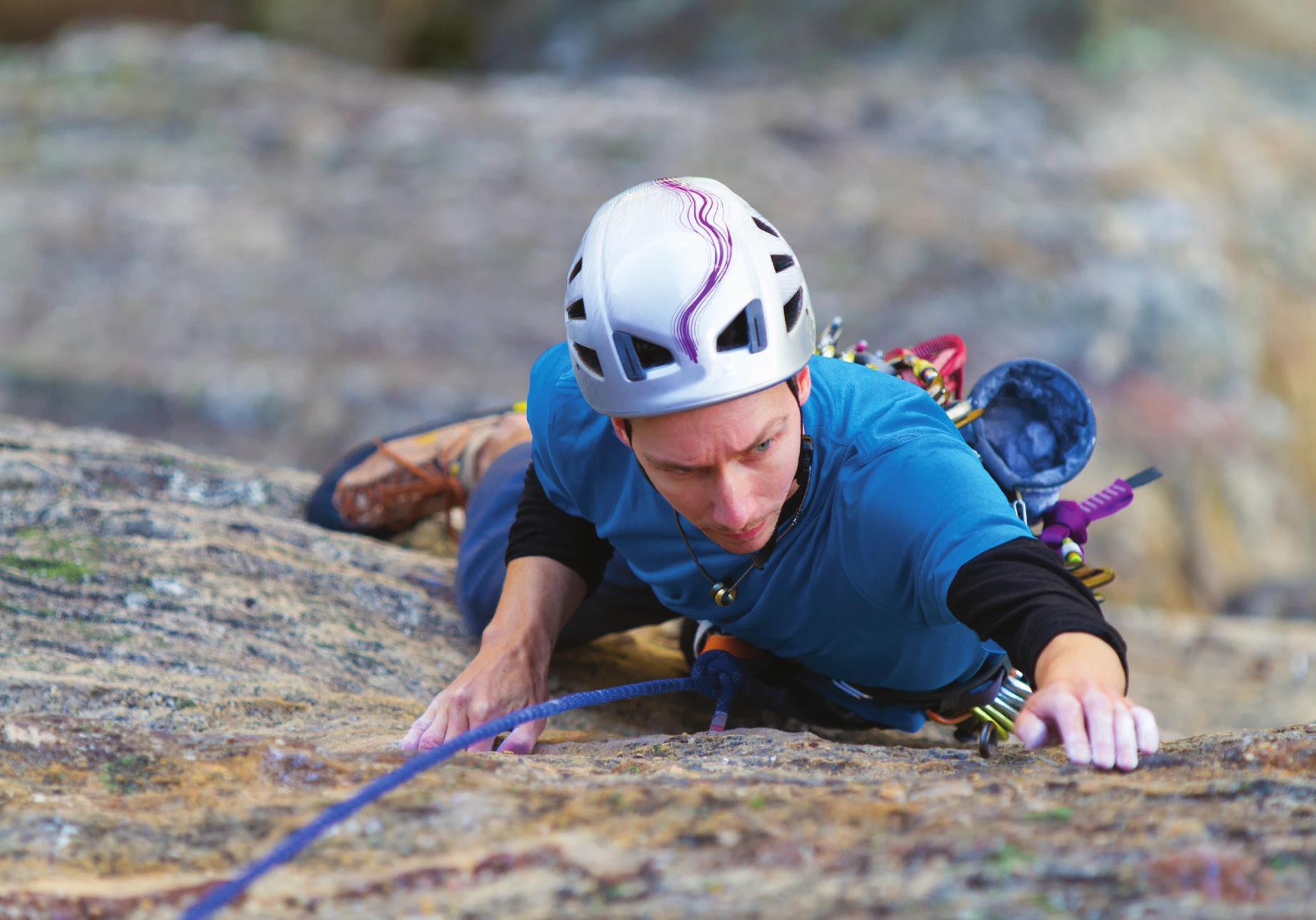
The ability to apply basic rock climbing movement techniques on a variety of rock types, enables the top rope leader to perform a range of necessary tasks. Proficiency in movement ensures they can efficiently lead routes to create top rope anchors in addition to providing participants with basic movement modelling, instruction, and coaching. In this chapter we will highlight some basic climbing movement techniques that can be applied when face climbing, crack climbing, and slab climbing.
Face Climbing
Face climbing activities are typically completed in terrain that is featured with a variety of edges, pockets, incut, and sloping holds. Limestone, sandstone, gneiss, quartzite, and conglomerate rock types often present face climbing opportunities.
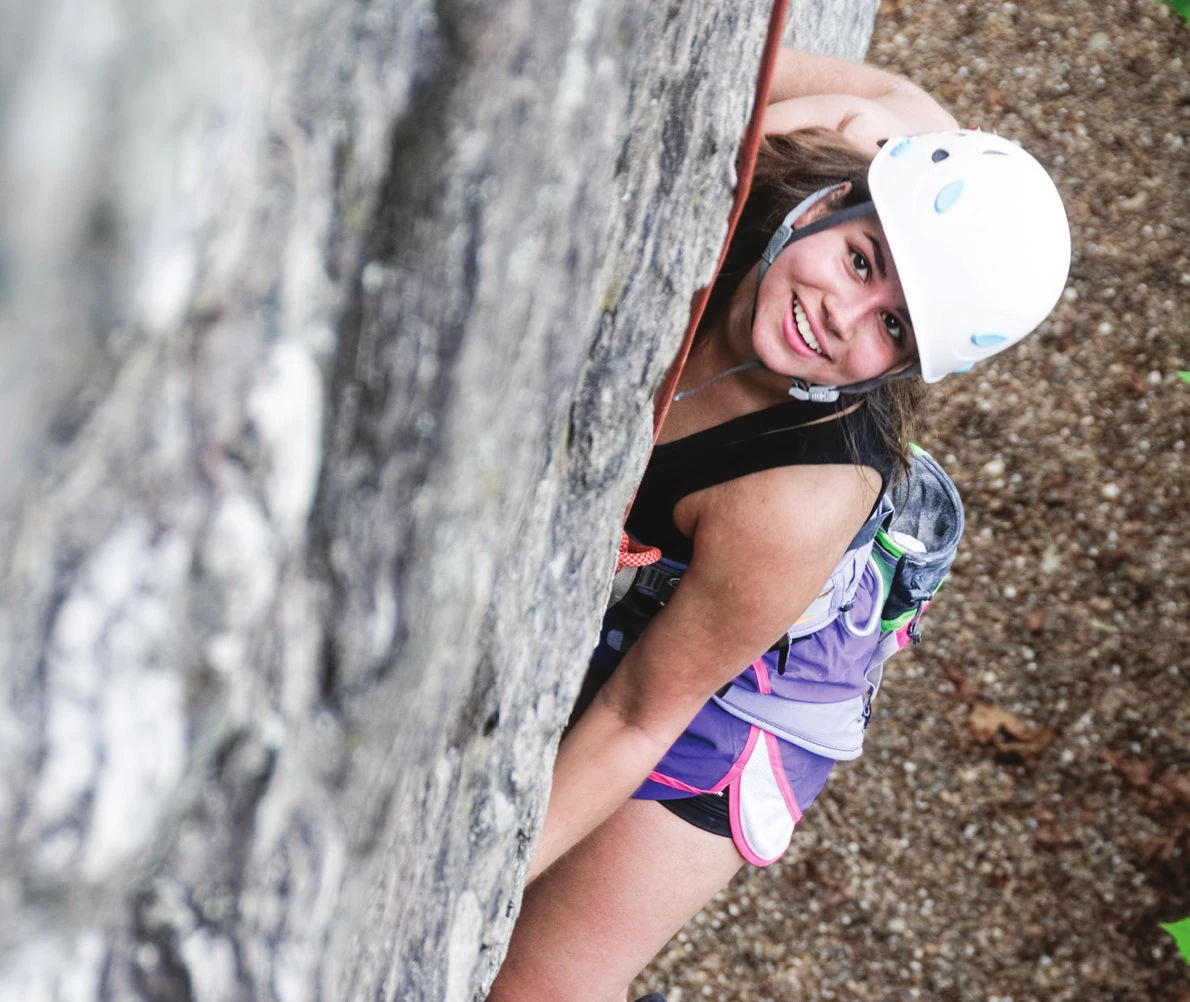
Hand Position
Three grip positions are commonly used while face climbing. These positions can be used in a variety of orientations depending on the alignment of the hold's most positive aspect.
Open Hand Position
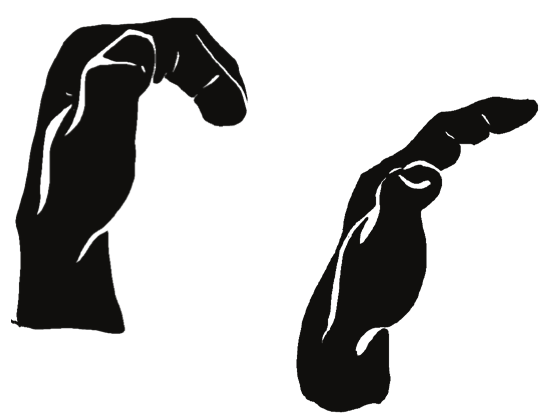
The open hand position is the most relaxed and ergonomic grip. It is often used for sloping holds, pockets, and large incut holds. This hand position requires the climber to create a 'C' shape with all five fingers of the hand prior to placing it on the hold.
Crimp Position
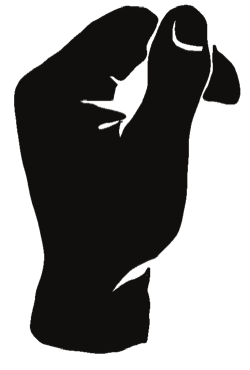
The crimp position enables the climber to grasp small edges by creating a closed finger position with the thumb wrapped over top of the index finger. This position is extremely powerful, and enables the climber to grasp small holds that an open hand position could not.
Pinch Position
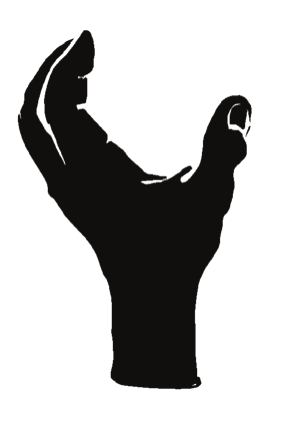
The pinch position allows the climber to grasp holds from two sides by opposing the thumb to the fingers. Unlike the open and crimp grip, it also enables the climber to articulate their body around the hold without adjusting the orientation of their grip.
A top rope leader's ability to demonstrate smooth and efficient movement, will enable them not only to model movement skills for the group, but will also inspire the participants' confidence in the leader. Efficient movement is fluid, precise, thoughtful, and should appear relatively effortless.
Foot Position
In addition to the smear position that is discussed in slab climbing techniques, the inside edge position, outside edge position, and front-point position are commonly used foot placements when face climbing.
Inside Edge Position
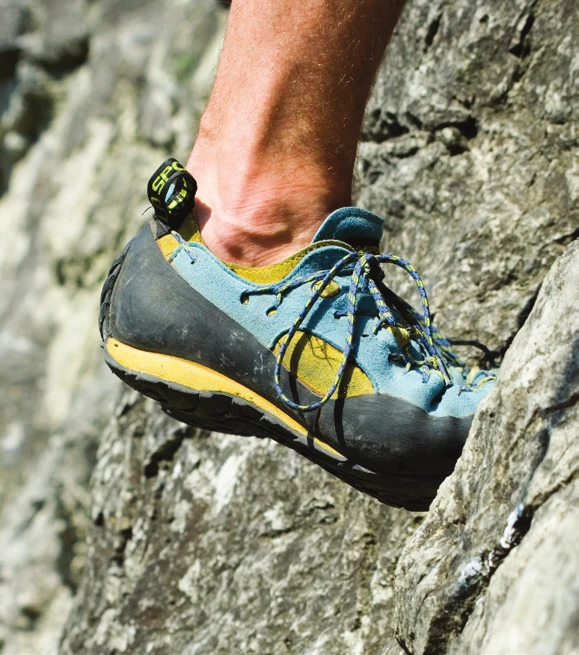
The inside edge position enables the climber to use the most powerful aspect of the foot and climbing shoe. This foot position involves aligning the foot parallel to the positive aspect of the hold, with the big toe positioned on the hold and the heel turned outward slightly. This position is typically used on edges and incut holds that possess a positive aspect, and is the most commonly used foot position while face climbing.
Outside Edge Position
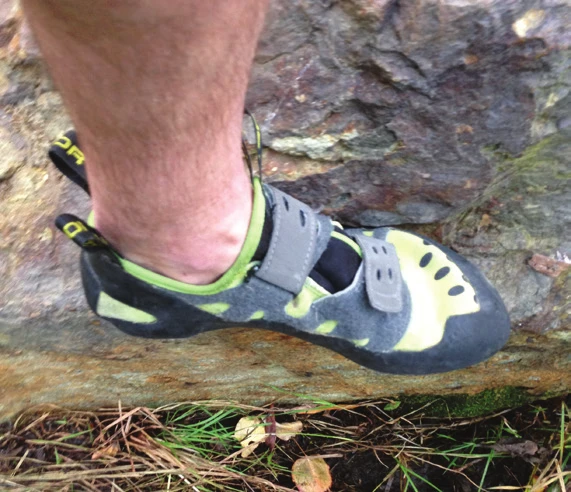
The outside edge position can be applied on small edges as well as larger holds, and is best suited to use in steep terrain or when the climber is moving laterally. Contrary to common belief, the outside edge uses the big, second, third, and fourth toes, and not the pinky toe. The outside edge position involves aligning the foot parallel to the positive aspect of the hold with the outside edge of the climbing shoe, and angling the heel out from the rock roughly 60 degrees due to the asymmetric shape of most climbing shoes. This foot position is less intuitive than the inside edge position, but enables maximum hip and shoulder rotation and therefore greater reach when moving laterally or moving through overhanging terrain.
Front-Point Position
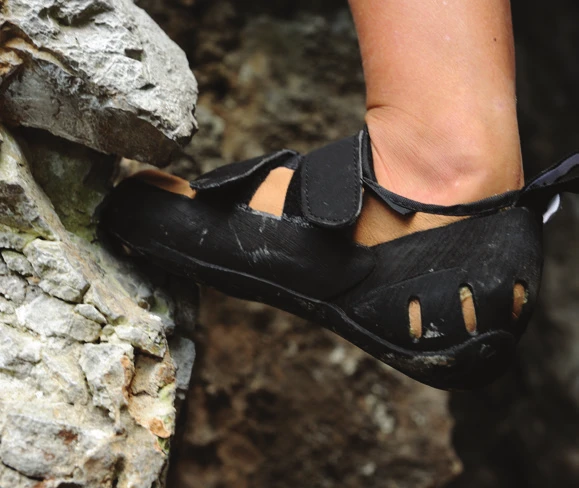
The front-point position is commonly used in pockets, cracks, and seams that are poorly suited to the inside and outside edge position. This position involves using the point of the climbing shoe where the inside and outside edges meet, and placing it in or on the most positive aspect of the hold. With the front-point position, the heel is typically positioned perpendicular to the aspect of the hold the foot is being placed on, in order to maximize the contact between the climbing shoe and the hold.
Body Position
The optimal body position for face climbing will vary greatly depending on the orientation and placement of the hand and foot holds. Whenever possible it is ideal to orient the body so that the hand holds are being used in alignment with their optimal direction of pull. However, it is also important that the centre of gravity remain over the feet whenever possible. At times it may be preferable for the climber to position themselves so that they are balanced over their feet at the expense of using a hand hold in a less than optimal position.
The general sequence for face climbing involves initiating upward momentum by pushing with the legs and feet before reaching up for a higher hand hold. Once a higher handhold, or set of handholds, has been reached; the centre of gravity should then be repositioned to enable the movement of the feet to higher footholds. Once the feet have been positioned on the higher foot hold or holds, and the next set of hand holds spotted, the centre of gravity can be repositioned and the feet and legs can again generate upward momentum.
Crack Climbing
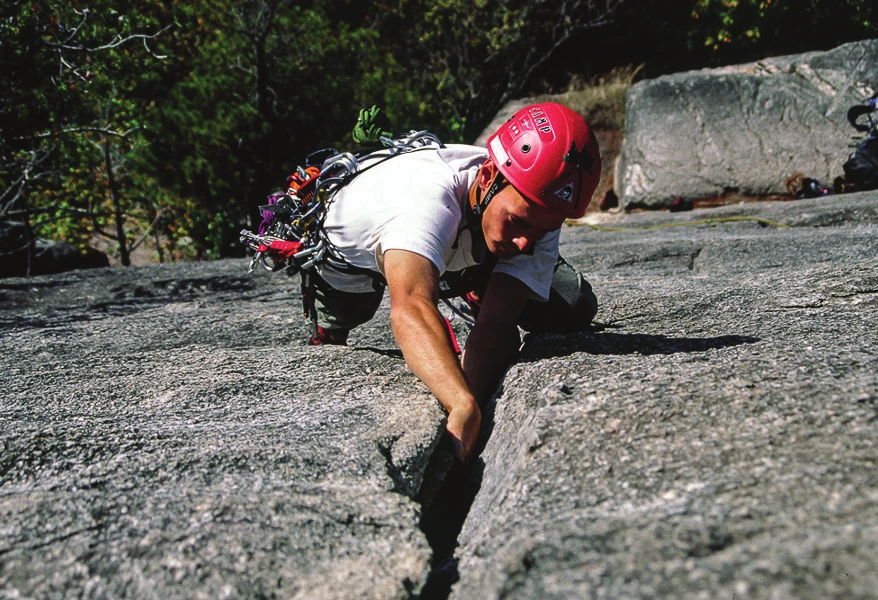
In certain instances, where the rock does not present notable face climbing holds, and the terrain is too steep to effectively slab climb, large cracks in the rock may enable the climber to make upward progress. Crack climbing is a unique skill that takes significant practice to become proficient with. Granite, basalt, quartzite, and occasionally gneiss, often present long continuous crack systems that require crack climbing techniques to successfully complete.
Hand Position
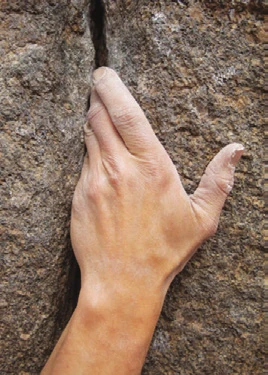
The optimal hand position for crack climbing will vary greatly depending on the size of the crack and the size of the climbers' hands. That said, regardless the width of the crack, the general concept is consistent. The climber must create a space-filler with the fingers, hand, fist, or body that matches the size of the crack, thus creating outward force between the opposing sides of the crack, or an obstruction that will jam above a constriction. Hand and fist sized cracks tend to be easier to learn on because they often offer solid jams in addition to positive foot placement opportunities. Thin finger cracks and large off-width cracks are typically far less secure and more challenging to climb as the jams are more difficult to create, and often the crack is either too narrow or too wide to accommodate positive foot placements.
Motivating climbers can be a challenging component of the top rope leader's responsibilities. It requires the ability to strike a balance between ensuring the participant is successful, while also ensuring they are adequately challenged. Encouraging a participant to the point of repeated failure often leads to a sense of unsuccessfulness, frustration, and overall decreased motivation. That said, a lack of difficulties and only attempting routes that are well within a climber's abilities, may not provide adequate challenge to maintain their enthusiasm, interest, or foster their growth in the sport.
Foot Position
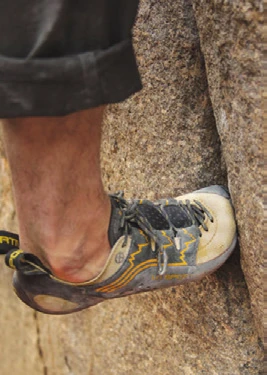
The optimal foot position for crack climbing depends on the width of the crack being climbed. Very thin cracks that will not accommodate foot jamming require a combination of smearing and front-pointing to climb efficiently. Moderate size cracks typically allow foot-jamming techniques to be applied. Foot jamming involves rotating the foot into the crack to wedge the toe of the shoe between the crack walls or above a constriction. Large cracks may require the foot to be turned perpendicular to the crack walls and jammed sideways rather than straight in. Regardless of the size of crack being climbed, good footwork is still critical in ensuring efficient upward progress.
Body Position
The body position for crack climbing differs from the positions used for face climbing, slab climbing, and corner climbing, as cracks generally force the climber to position their hands and feet in-line with one another. This body position is less stable laterally and therefore the climber needs to be acutely cognisant of their centre of gravity and ensure that it remains well balanced over the feet or beneath the hands at all times. Similar to slab climbing, shorter deliberate moves tend to be more effective when crack climbing than large dynamic ones.
Corner and Chimney Climbing
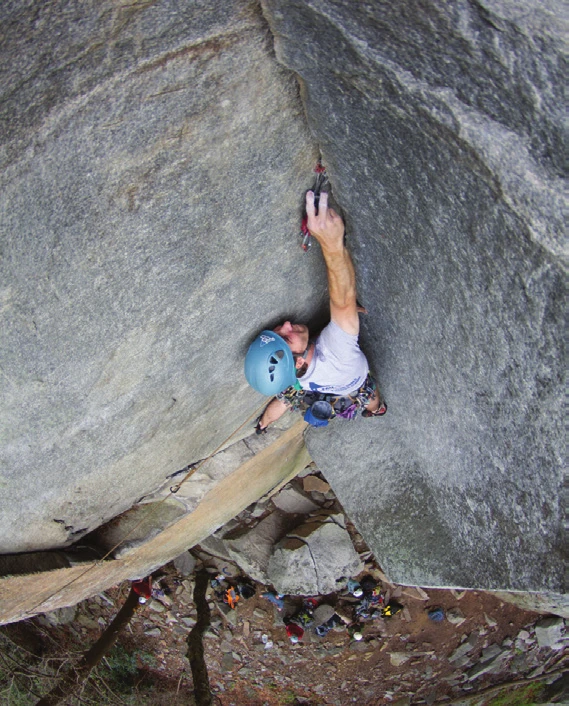
Prominent corner and chimney systems in certain rock types such as granite, basalt, limestone, gneiss, and sandstone, often allow a climber to ascend steep terrain with minimal, if any, significant holds. Corner and chimney climbing requires good balance, confident foot positioning, creative body positioning, and effective pushing and pressing between opposing rock features.
Slab Climbing
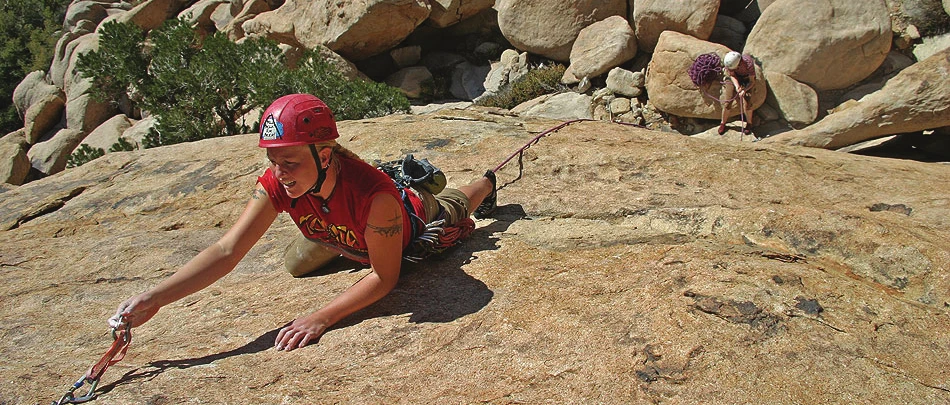
Slab climbing activities occur in terrain that is less than vertical and devoid of prominent holds. In this terrain, friction between the climbers' climbing shoes, the climbers' palms, and the rock, enable upward progress. Limestone, granite, and occasionally sandstone as well as some conglomerate rock types often present slab climbing opportunities.
Hand Position
Occasionally while slab climbing, small crimp grip position hand holds may present themselves, however, the typical hand position for slab climbing involves palming the rock with relatively flat hands. This hand position is rarely intuitive, novice participants may have the tendency to grasp onto features in the rock, rather than using their palms. The palming position does not allow for the rock to be grasped, instead it generates friction between the palm of the hand and the rock surface. This enables the climber to remain balanced and adjust their centre of gravity and reposition their feet. The palming hand position typically involves orienting the fingers in an upward manner, but occasionally a reverse palm position with the fingers pointed downwards, may be preferable.
Foot Position
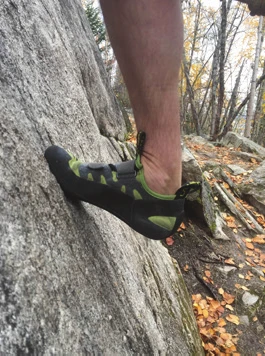
The commonly used foot position for slab climbing is referred to as the smear position. The technique involves pressing the sole of the climbing shoe under the ball of the foot against the texture of the rock or against any small convex or concave features in the rock. Unlike edging and front-pointing, which require the foot to be placed parallel to the positive aspect of a hold, smearing involves flexing the foot below the toes, and dropping the heel down slightly to maximize surface contact between the sole of the shoe and the rock surface. The heel should be positioned perpendicular to the surface that is being smeared against, and the centre of gravity adjusted to ensure the climber's weight is being directed to the foot placement and adequate friction created to maintain the smear.
Body Position
As slab climbing occurs in terrain that is less than vertical, the body position differs from that which is typically used for steeper forms of climbing. The general body position for slab climbing involves slightly shifting the hips and centre of gravity away from the rock surface to ensure the climber's weight is positioned directly over the feet. Slab climbing movement is often slow and balanced, with smaller static moves being preferable and more stable than large dynamic ones.