Responding to Emergencies
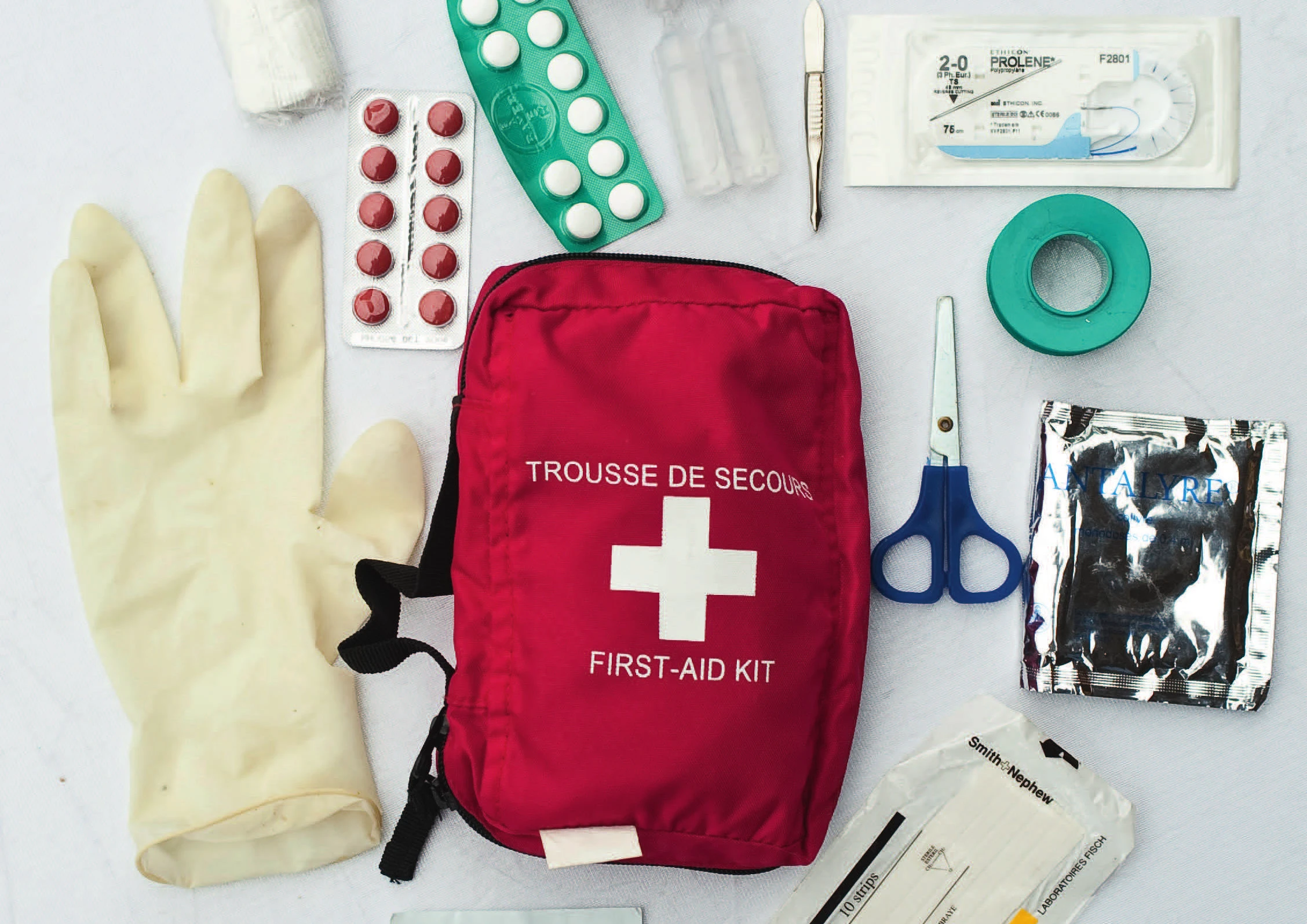
Despite best laid plans, top rope leaders may at times be required to respond to accidents or emergencies within their group or other recreational climbing groups in the area. It is therefore imperative that top rope leaders maintain first aid currency and be properly equipped to manage minor emergencies and if necessary seek the assistance of organized rescue for major emergencies. There are many approaches to managing emergencies, in this chapter we will explore the basics of first aid, emergency communication, and how to manage the group if an accident occurs.
The basic principles outlined in this chapter are not a replacement for formal first aid training. All top rope leaders should possess current standard first aid and CPR certificates.
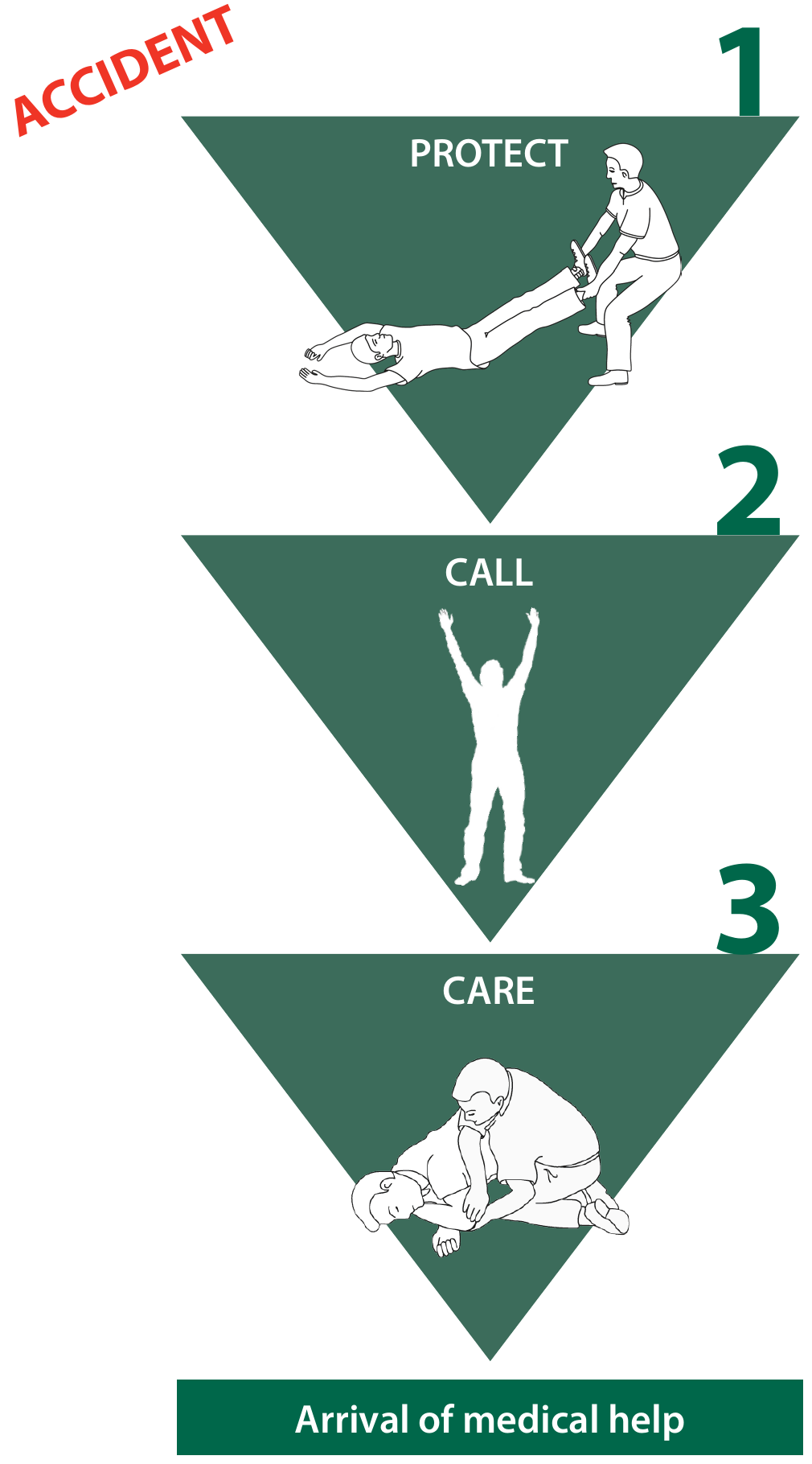
The underlying principles in any emergency situation include; protecting the patient, calling for help if required, and providing initial care and treatment.
Performing First Aid
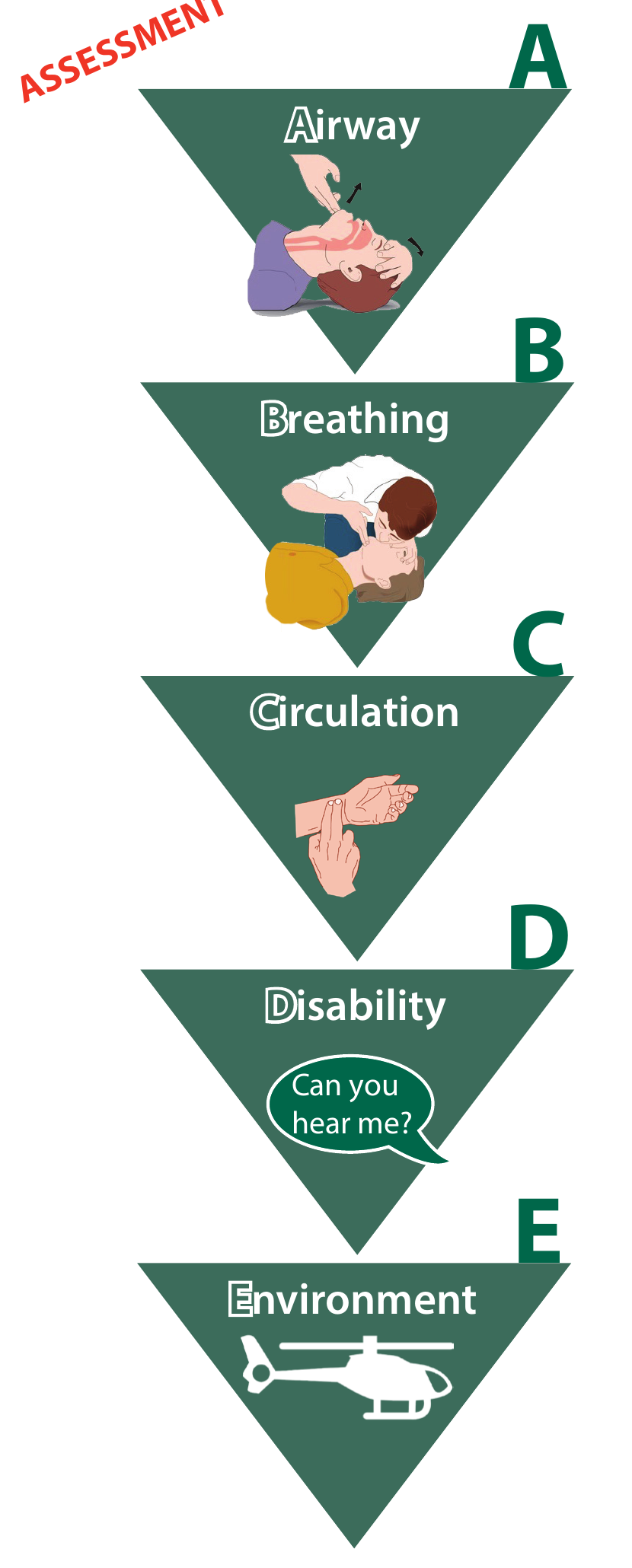
Once the scene has been assessed and deemed safe, or the patient has been moved to a safe location and a call for organized rescue (if required) has been made, the top rope leader can then provide initial first aid to the victim. Depending on the severity of the injury the general first aid procedures include:
- A (airway), ensuring the patient's airway is unobstructed;
- B (breathing), establishing that the victim is breathing and determining the quality of breath;
- C (circulation), checking for a pulse and the general heart rate over the period of one minute in addition to a quick check for severe bleeding;
- D (disability), determining the victims level of consciousness and awareness, checking for sensation in all extremities; and
- E (environment), determining the effects the weather will have on the ability to treat the patient, effectuate a rescue, and manage the remaining group members.
Due to the nature of rock climbing activities, the most common accidents are trauma related, and involve bleeding and/or fractures. In the case of bleeding, direct pressure should be applied to the wound site using sterile, non-stick dressings, and if practical the wound elevated above the heart. When dealing with bleeding injuries, the top rope leader should ensure they protect themselves and their victim from blood-borne pathogens by wearing gloves. In the case of fractures, small bones should be splinted, immobilized and sensation below the break should be confirmed. Fractures of long bones, such as the femur, require immediate evacuation and may necessitate gentle traction to ensure continuous blood flow below the break to the extremity of the leg.
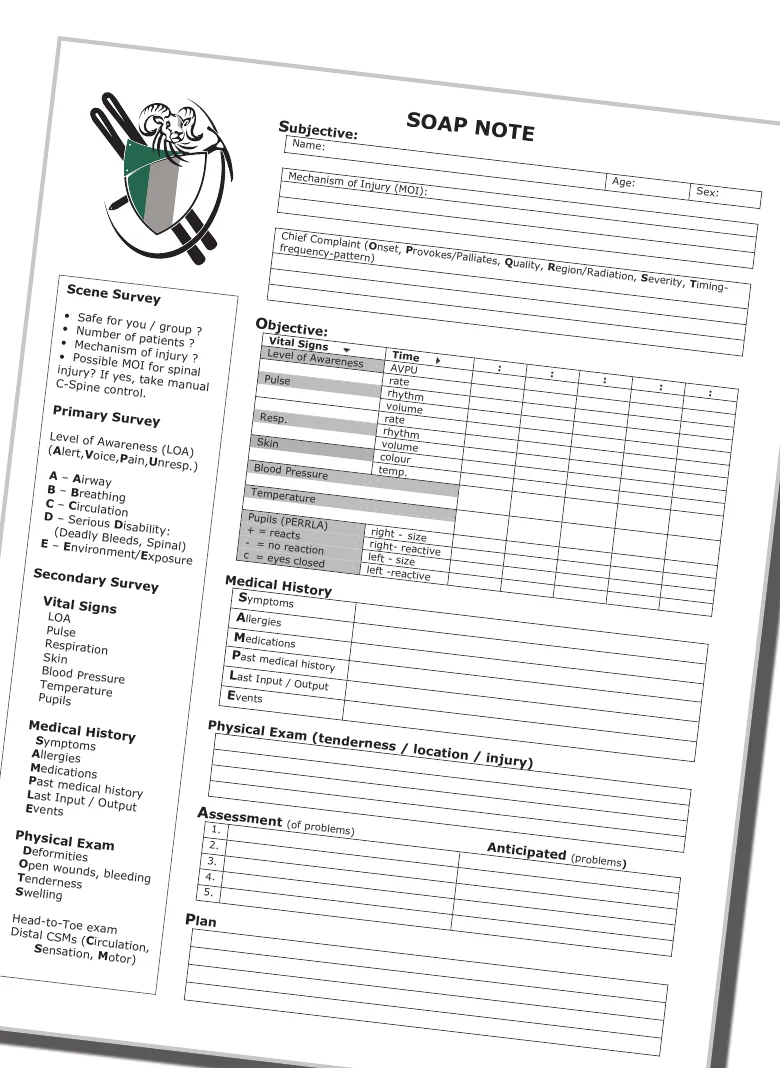
Documenting patient information, in the event of an accident, can be beneficial in determining whether the patient's condition is improving or deteriorating, can be useful to organized rescue and emergency medical services, and can occupy a member of the group during an emergency.
Common items to include in a first aid kit for a day of climbing include:
- Latex gloves;
- Antiseptic wipes;
- Pressure bandages or dressings;
- A good selection of adhesive bandages;
- Sterile non-stick pads;
- Adhesive elastic bandage;
- Non-adhesive elastic bandage;
- Medical tape;
- Steri-strips;
- Moleskin or second skin;
- Small scissors;
- Nail clippers;
- Compact mouldable splint; and
- Triangular bandages.
Emergency Communications
If organized rescue is deemed necessary, communication should be initiated immediately and the following information provided to the local agency:
- The caller's name and telephone number, if the communication is being initiated by phone;
- The nature of the accident and the number of patients;
- The severity of the patient's injuries, if known;
- The level of consciousness of the patient;
- The exact location of the patient;
- The time of the accident;
- The local weather conditions;
- The size of the group; and
- Any first aid actions that have been initiated.
Table to Keep in First Aid Kit
| Question | What to report |
|---|---|
| WHO? | Your first and last name, and where you can be reached. |
| WHY? | Nature of the accident, number of victims, seriousness of the situation. Is the victim conscious? |
| WHERE? | Location, route, altitude, Etc. |
| WHEN? | Time of the accident. |
| CURRENT WEATHER CONDITIONS? | Winds, visibility, Etc. |
Ensuring that contact information for organized rescue is readily accessible is of crucial importance if an emergency necessitates this service. Phone numbers, radio frequencies and communication devices should be kept together and placed in an easily accessible location in the top rope leader's pack. Further, the leader should instruct participants in the use of all communication devices at the start of the outing so they can initiate the call for help if required.
If organized rescue is coming by air, simple arm signals can assist the pilot in locating the injured party quickly.
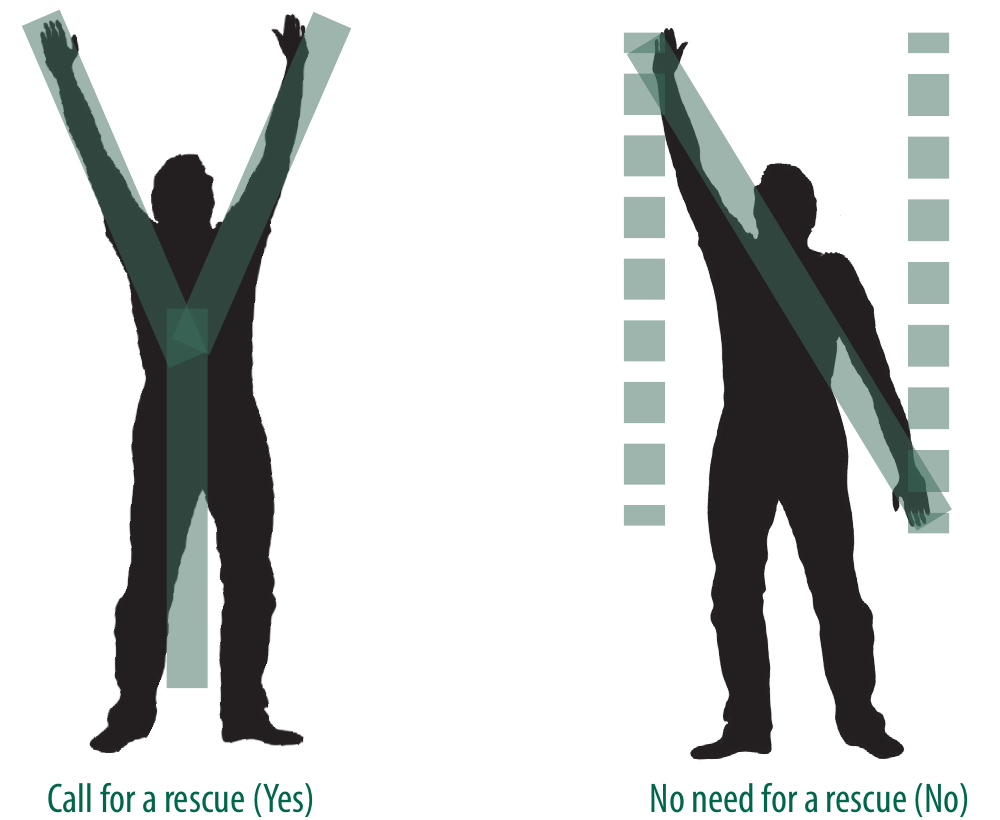
If organized rescue is coming by ground, designating one or two runners from the group to meet rescue personnel at the trail head and direct them to the accident site is advisable when the site is difficult to locate or unfamiliar to rescue personnel.
Group Management in Emergency Situations
Top rope leaders need to be cognisant of all group members in the event of an accident. While the patient may require immediate attention, uninjured members of the party often also require care and monitoring. If possible and practical, providing uninjured group members with tasks that assist in the management of the emergency situation may help occupy them. Common tasks group members could complete in an emergency include:
- Assisting with first aid and documenting patient history and vitals;
- Creating a shelter or fire;
- Meeting organized rescue at the trail head; and
- Monitoring patients with non-life threatening injuries.
Once the group is safe, ACC incident reporting requirements apply. See Reporting a Trip for the current process and deadlines, and Insurance and Liability for how coverage works for volunteer leaders.